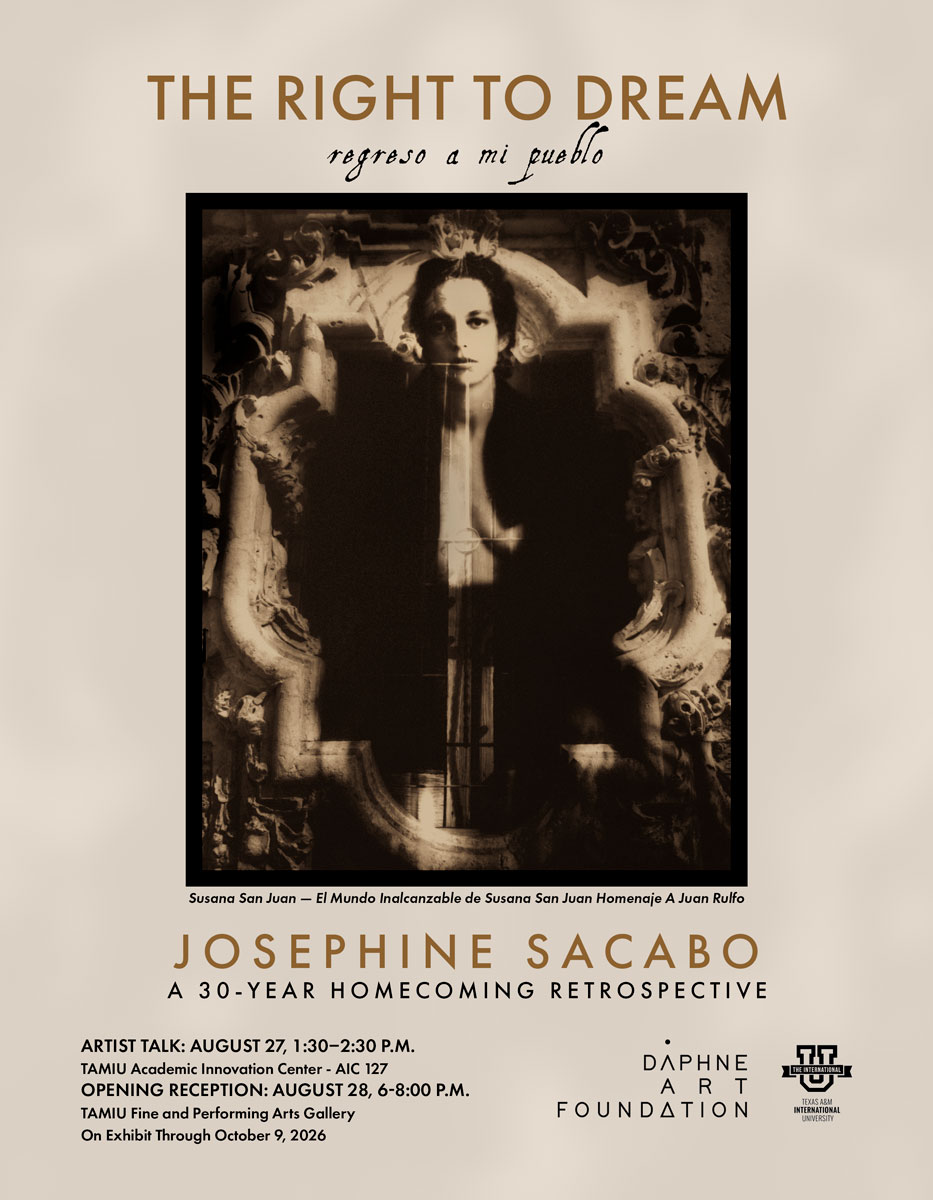





The Laredo art scene has gone through many movements since the 1970s. From the folks who started the Laredo Art League and the Laredo Civic Music association (1936-1978) — precursors, respectively to the Laredo Center for the Arts and the Laredo Philharmonic Orchestra; from the thespians and dance groups that kept our heritage alive; and the arts advocates who fought to have a hub for the arts in the heart of downtown. The movements have come in waves, and were it not for those who took the lead, the Laredo art scene would not be what it is today.
The last ten years (2015-2025) brought new spaces of art like Musa Alternative Art Space (2017-2018) and Schwartz Gallery (2018-2020), both located at the Pan American Courts Arts Complex. Musa and Schwartz continued in the tradition of Sound Alternative Art Space, showcasing contemporary art that pushed the boundaries of visual art. A July 7, 2020 Instagram post described the Schwartz Gallery as “a hub for artists to come together and create astonishing murals all over Laredo.” Members of the community were invited to “support our local arts and drop by to show love” for artist Diego Canales’ CMYK Witches, 2020. Canales’ iconic mural, along with Poncho Santos’ “I Love You Chingos” sign, both visible at Frontera Beer Garden, are essential in holding space for the movement that took shape in the late 2010s.
Musa and Schwartz were unfortunately not able to sustain the valuable work and space they offered. The pandemic truly shook us all.
Since 1993, the Laredo Center for the Arts (LCA) has been coordinating, promoting, encouraging, and supporting the arts in the Laredo/South Texas area. In 2021 the organization made a critical shift in the type of artwork it presents with the inception of its Acquisition Project. Since then, LCA has presented work by Laredo artists Jorge Javier López, César A. Martínez, Ana Laura Hernández, Ethel Shipton, Juan Juarez, Miki Rodriguez, Angelica Raquel, and Peter Glassford. LCA has also presented collective curatorial projects like The Border is a Weapon (2022) curated by Gil Rocha and [artcrush] Chai’n Brai Laika Daimon (2024). San Ygnacio-based artist Eric Avery filled the LCA with a remarkable transformation of the space with his solo exhibition Art as Medicine (2023).
Casa Daphne at 1420 Washington St. opened its doors as a contemporary art gallery at the end of 2022 with an Art After Hours exhibition that showcased artwork by Alexander Barron, Alejandro Cortinas, Alexa Hernandez, Hector Hernandez, Jorge Javier López, Pedro Morales, Nestor, Rizu X (Lizett Montiel), Gil Rocha, and myself. The space continues to showcase work by contemporary artists from Laredo and afar. The space is managed by Daphne Art Foundation and is generously on loan by founder and president Alyssa Cigarroa.
Laredo College has played a big part in presenting contemporary art to its students and the community at large at the Martha Fenstermaker Memorial Visual Art Gallery, which not only showcases student artwork but invites regional and national artists to exhibit their work, and on occasion invites guest curators.
Texas A&M International University, too, serves as an important venue for visual arts exhibitions and its presentations of the theater and performing arts year-round.
Spaces like Los Olvidados Coffee Shoppe and Gallery have also played a fundamental part in Laredo’s arts ecosystem.
These spaces of arts and culture are vital. The artwork they present across disciplines are great representations of how contemporary art reflects life and how artists approach their practices to tell stories.
Last year, after twenty years, artists, art-lovers, and arts advocates said goodbye to a pillar of the Laredo arts community when gallery owner Gayle Aker-Rodriguez closed the doors of Gallery 201, a crucial community exhibit space in a historic downtown building that welcomed many iterations of the arts, including Border Slam poetry, meditation evenings, workshops, summer classes, and flamenco and music performances.
The loss of that vital space for art in a City with so few exhibit venues left a significant void. Art and cultural spaces preserve narratives. Without them, the collective memory of the community can become fragmented, and it can become more difficult to transmit knowledge to future generations of the work of those who made and reshaped our art movement.
Spaces of art like Casa Ortiz, through their exhibitions and community programs, are essential in making the arts and culture accessible to everyone, ensuring that arts and culture remain an experience for all. Dedicated spaces for young and aspiring artists to share their work provide a supportive environment for creative development and building career skills and confidence. They also foster a strong sense of community and belonging. Exhibiting artists and performers receive invaluable feedback and recognition from their peers and mentors, and their audiences validate their efforts.
May the new year bring new spaces for the arts. It is inspiring to see how Laredo’s art movement continues to shift and grow.


