




A blue and red accordion splayed open above the words, “En Vivo y A Todo Color Laredo.” I found the flyer at a local cafe, advertising a new art exhibit by Rio Grande Valley native Cande Aguilar. Another postcard on the board showed the unmistakable painting Blue Bato con Sunglasses by César A. Martinez.
In the Fall of 2022 I was visiting Laredo from Austin for what was supposed to be an unremarkable weekend with family. In my downtime, I stopped at the Border Heritage Museum to check out an exhibit on Cantinflas, featuring old movie posters of the iconic Mexican caricature.
Then I walked to the Laredo Center for the Arts (LCA) for Cande’s barrioPop exhibit, which in part was a tribute to conjunto musician Gilberto Perez Sr., the artist’s padrino.
A long mural on a curved panel offered surreal glimpses of the life on the streets many of us grew up with: a stand advertising “Ricos Elotes,” followed by a line of characters ranging from the devil to El Chavo del Ocho waiting to enter a club named “Conjunto.”
I had unfortunately missed the César A. Martinez exhibit, which happened to be the first in a series of exhibits that have brought new life and energy to Laredo’s arts scene.
Both Aguilar and Martinez are pillars of the Chicano arts community. I would later see more of their work in a visit to Cheech Marin’s Center for Chicano Art in Riverside, California. Though the subject matter of their work aligns with the art and culture of South Texas, their work seemed somewhat out of place there. After all, Laredo had never fully embraced Chicanismo like other parts of South Texas. We were a whole other beast, the Río Grande Valley’s rebellious younger primo.
Historically, Laredo has been culturally isolated despite the near constant movement of people and commerce from across the globe through this port city. In addition to our personal conflict with Chicanismo, our traditions like the George Washington’s Birthday Celebration are headscratchers to most outsiders and many of our own. Our top-notch sense of humor thrives only within county limits and falls flat as you move farther out of our radius.
Something had changed in the 2010s while I was away working in Houston and then Austin. I did not quite grasp it at the time that I visited barrioPop, but what I had experienced at LCA represented a sea change in the Laredo creative community that would have ripple effects through downtown and the city at large.
As I continued meeting people in Laredo’s arts space, I realized I was not entirely correct that Laredo’s creative scene was anything new. This city’s unique history has always borne fascinating creatives, and interesting things had been going on in the arts for a very long time. After all, this was the headquarters of Laredo’s iconic feminist journalist Jovita Idar, who in her family’s newspaper, La Crónica, focused her writing on civil rights, the education of Mexican-American children, and women’s suffrage. Hers was a voice of protest against racism and lynchings. In her circle were intellectuals and revolutionaries who passed through our port to and from the Mexican Revolution.
The boom of tourism to Nuevo Laredo drew all kinds of wildcards. The 1960’s brought hippies and rock stars and Laredo’s own brief psychedelic scene centered around the La Paz complex downtown. But like the river that cuts through us, these people and ideas have been fluid and fleeting, flowing through us to provide brief nourishment as they flee to greener pastures.
The hardening of the border since 9/11 and then through consecutive migration crises stifled much of this flow, but it had the result of causing us to look inward instead of out. Without our cultural outlet across, new movements and creatives sprung up en este lado from the grassroots. The Laredo Center for the Arts, the city’s arts powerhouse, seized the moment with its Arts Acquisition Program and associated exhibits that began with the homecoming of César Martinez and has continued nonstop after Cande Aguilar with Ethel Shipton, Jorge Javier López, Angel Cabrales, Eric Avery, Los Outsiders…the list goes on.
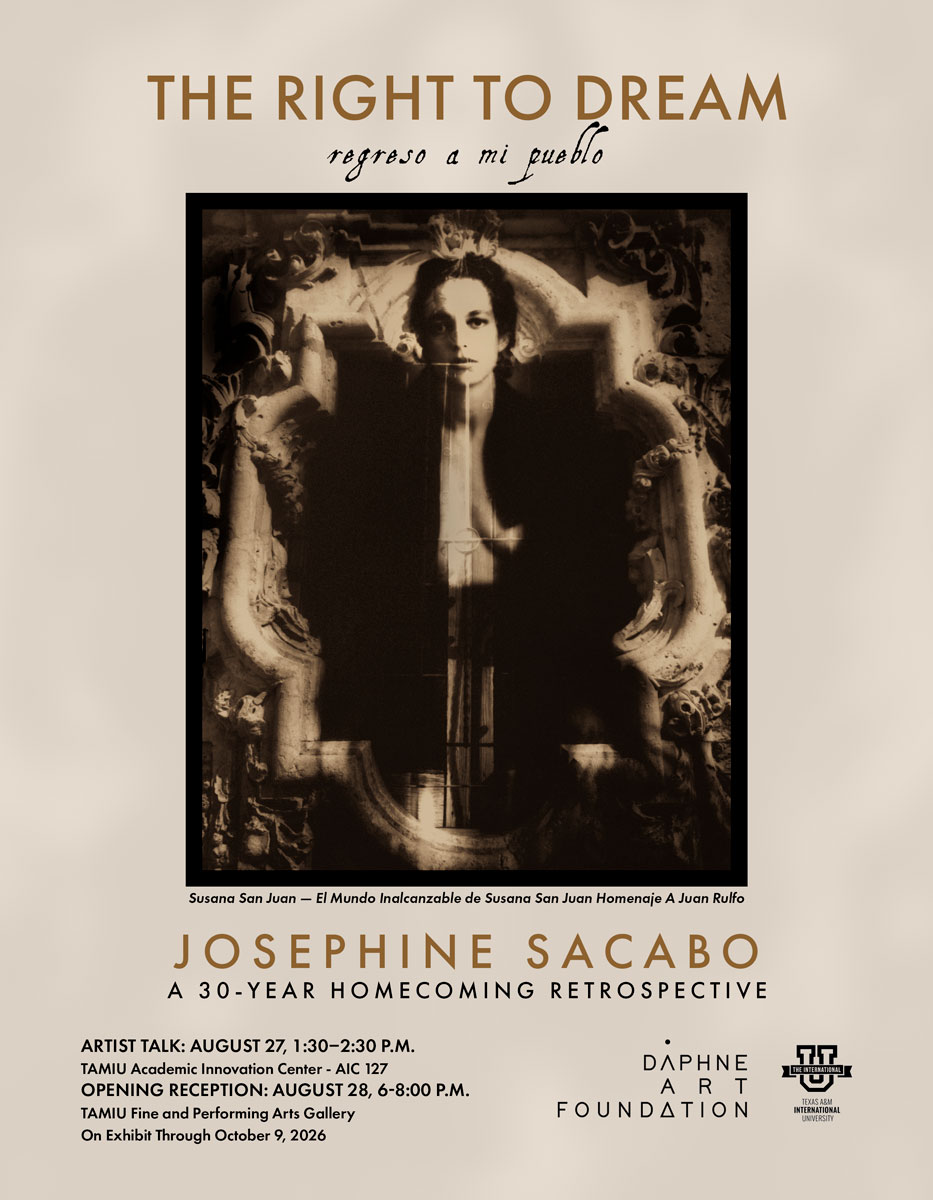
In 2019, newcomer Daphne Art Foundation came to life with a focus on emerging young artists in South Texas. Surrounding the orbit of LCA and Daphne are various smaller spaces like Los Olvidados Coffee Shoppe that give younger creatives spaces that they did not have a few years ago. The result is that more people are staying and building a richer community rather than leaving and never looking back.
During December 2025 CaminArte, I returned to the LCA to check out the new exhibit by Sarah Fox. Though not from Laredo or the border like many of the other recent hits, you can always tell when somebody should be an honorary Laredoan after a test with our sense of humor. Her provocative, sexually-charged sculptures, puppets, and experimental short films would probably have been unimaginable in Laredo 20 years ago.
According to a gallery assistant of that era who is now a player in the arts world, exhibits less provocative were rejected in years past.
Fox’s exhibit visibly wowed anybody who visited, but this was just one stop during CaminArte. On the other pole was Casa Ortiz, which frequently has too many different exhibits and happenings to count. This Saturday, the courtyard was filled with tejano music from the movie Chulas Fronteras, co-hosted by the Laredo Film Society (LFS).
The heart of CaminArte beats under the umbrella of the Laredo Cultural District, formed in 2021. Under its helm, the Laredo arts scene just got notice of a game-changing grant from the Mellon Foundation that will fund collaborative activities among the District, the LCA, Daphne, and LFS.
As we toast a new year of endless possibility, I’m proud to call this place home.
(Native Laredoan Ryan Cantú has 10 years of experience in civil litigation. He is on the board of the Laredo Film Society, and is currently under contract with Texas Tech University Press for a book about the culinary traditions of South Texas and Northeastern Mexico.)


